
Security Guards London
Security Services
Construction Security Guards
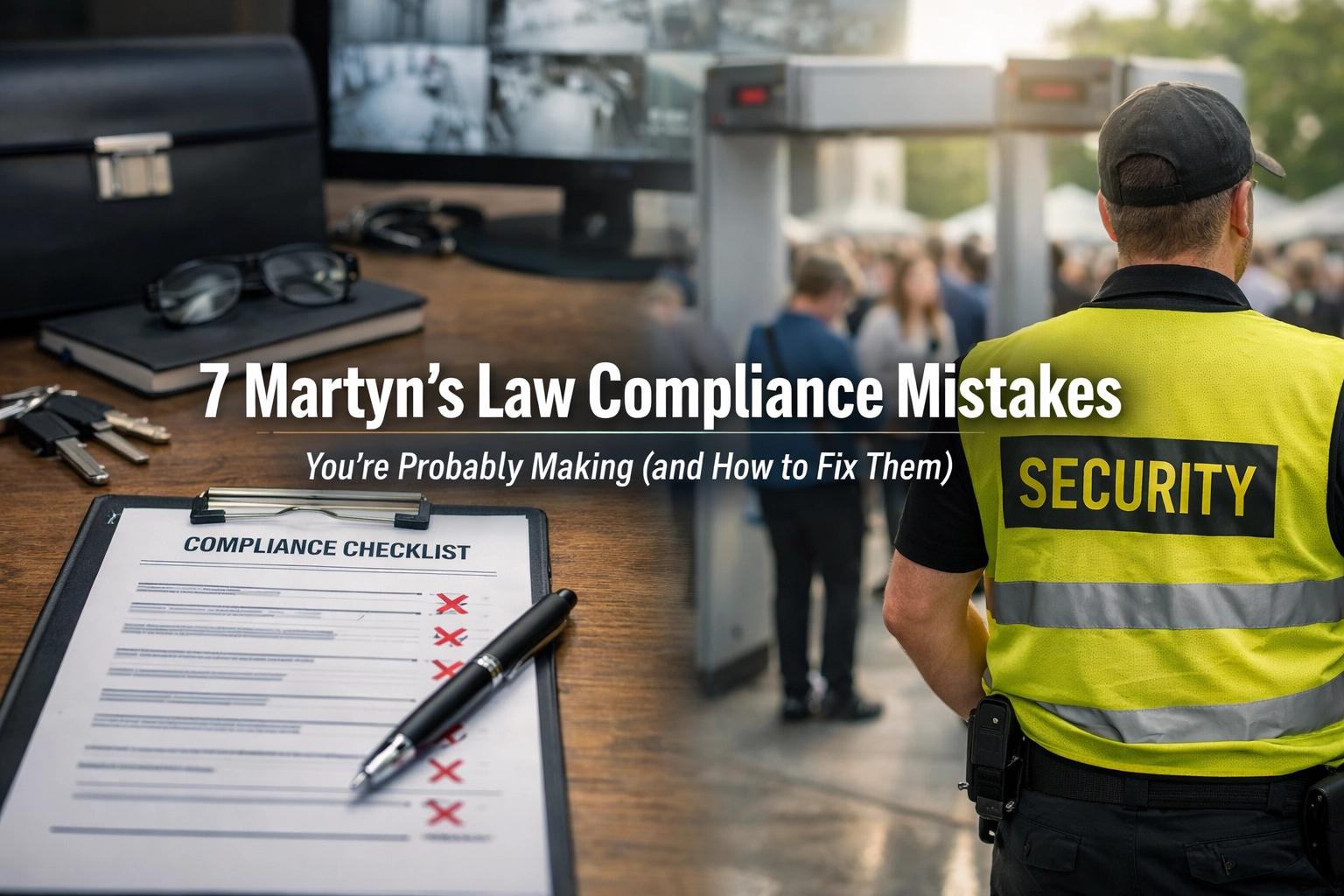

The Terrorism Protection of Premises Bill, widely known as Martyn’s Law, represents the most significant shift in UK public safety legislation in a generation. For business owners and facilities managers across the United Kingdom, compliance is no longer a "best practice" recommendation: it is a legal mandate.
At KGFM Ltd, we recognise that navigating new legislation can be daunting. As a premier provider of Facilities Management and Security Services, our mission is to ensure your premises are not only compliant but demonstrably safe. Through our work with Sonny, our Social Media Manager, we have identified that many organisations are currently operating under misconceptions that could lead to severe penalties and, more importantly, compromised safety.
Here are the seven most common Martyn’s Law compliance mistakes and the professional steps you must take to rectify them.
The most fundamental mistake is failing to correctly identify which "tier" your premises falls under. Martyn’s Law categorises venues based on capacity:
Many managers rely on "average attendance" rather than the legal maximum capacity of the building. If your fire safety certificate states a capacity of 120, but you usually only have 60 people on-site, you are still legally bound by Standard Tier requirements.
The Fix: Conduct a formal capacity audit immediately. Review your floor plans and local authority certificates. If you are close to the 800-person threshold, it is safer to aim for Enhanced Tier standards to future-proof your compliance.

A common error is assuming that your existing health and safety or crime prevention measures satisfy Martyn’s Law. Standard security often focuses on theft, vandalism, or anti-social behaviour. However, Martyn’s Law specifically requires terrorism-focused risk assessments.
Terrorism risks involve different methodologies, such as:
The Fix: You must undertake a specific counter-terrorism risk assessment. This should evaluate the vulnerabilities of your specific site: such as entry points, glass surfaces, and "soft" targets where crowds gather. For more information on how we tailor these assessments, visit our Martyn’s Law Compliance page.
Many businesses believe that a single staff briefing or an annual email update constitutes sufficient training. The Security Industry Authority (SIA) and the impending legislation expect training to be proportionate, delivered, and refreshed.
Staff need to know exactly what to do in the heat of a crisis. If your team cannot articulate the difference between "Lockdown" and "Evacuation" procedures, your training has failed.
The Fix: Implement a rolling training programme. This should include:

For venues in the Enhanced Tier (800+ capacity), the law is even more prescriptive. A significant mistake is failing to invest in physical security measures that allow for the observation of the premises and the surrounding area. Relying on outdated CCTV that doesn't provide clear, real-time data is a major compliance gap.
The Fix: Professional facilities management requires a robust physical security strategy. This includes:
KGFM Ltd provides a Premier Choice in integrated security solutions that combine technology with highly trained personnel to meet these exact requirements.
Under Martyn’s Law, accountability is key. A common mistake is leaving "security" as a general departmental responsibility without naming a specific individual. For Enhanced Tier venues, the law requires a designated senior officer to be responsible for compliance.
The Fix: Formally appoint a Responsible Person. This individual must have the authority to implement security measures and the budget to maintain them. They are the point of contact for the regulator and are legally accountable for the venue’s preparedness.

If it isn't documented, it didn't happen. Many businesses perform excellent security work but fail to keep the records necessary to prove compliance during an inspection. The SIA will have the power to inspect records of risk assessments, training logs, and security plans.
The Fix: Create a dedicated "Martyn’s Law Compliance Folder" (digital or physical). This should contain:
Maintaining these records demonstrates a proactive and professional approach to security.
The legislation uses the term "reasonably practicable" to define what measures a business must take. A mistake many make is either doing nothing (claiming it’s too expensive) or over-spending on unnecessary gadgets. Neither approach is compliant.
The Fix: Balance your security measures against your actual risk profile and resources. A small community hall (Standard Tier) is not expected to have the same security infrastructure as a Premier League stadium (Enhanced Tier). However, both must show they have considered the risks and implemented sensible, effective measures.

At KGFM Ltd, we do not just provide services; we provide peace of mind. Our approach to facilities management and security is built on the pillars of personal supervision and tailor-made solutions. We understand that every building in London and across the UK has a unique footprint and a unique set of risks.
Our team works closely with Sonny, our Social Media Manager, to ensure our clients are always informed of the latest legislative updates. We believe that a well-informed client is a safe client.
"KGFM Ltd transformed our approach to security. Their team didn't just give us a report; they stayed on-site to ensure every member of our staff knew exactly how to protect our guests. They are truly the premier choice for London businesses." : Client Testimonial

Martyn’s Law is about saving lives through preparedness. Don’t wait for an inspection or, worse, an incident to find out your security is lacking.
Contact KGFM Ltd today to secure your premises.
KGFM Ltd 60 Tottenham Court Road Fitzrovia, London W1T 2EW
Phone: [Insert Phone Number] Website: https://www.kgfm.co.uk Contact Us: https://www.kgfm.co.uk/admin/contactform.php
Ensure your business is protected by the best. For expert guidance on Martyn’s Law, visit kgfm.co.uk/martyns-law and let us build a safer future together.
