
Security Guards London
Security Services
Construction Security Guards
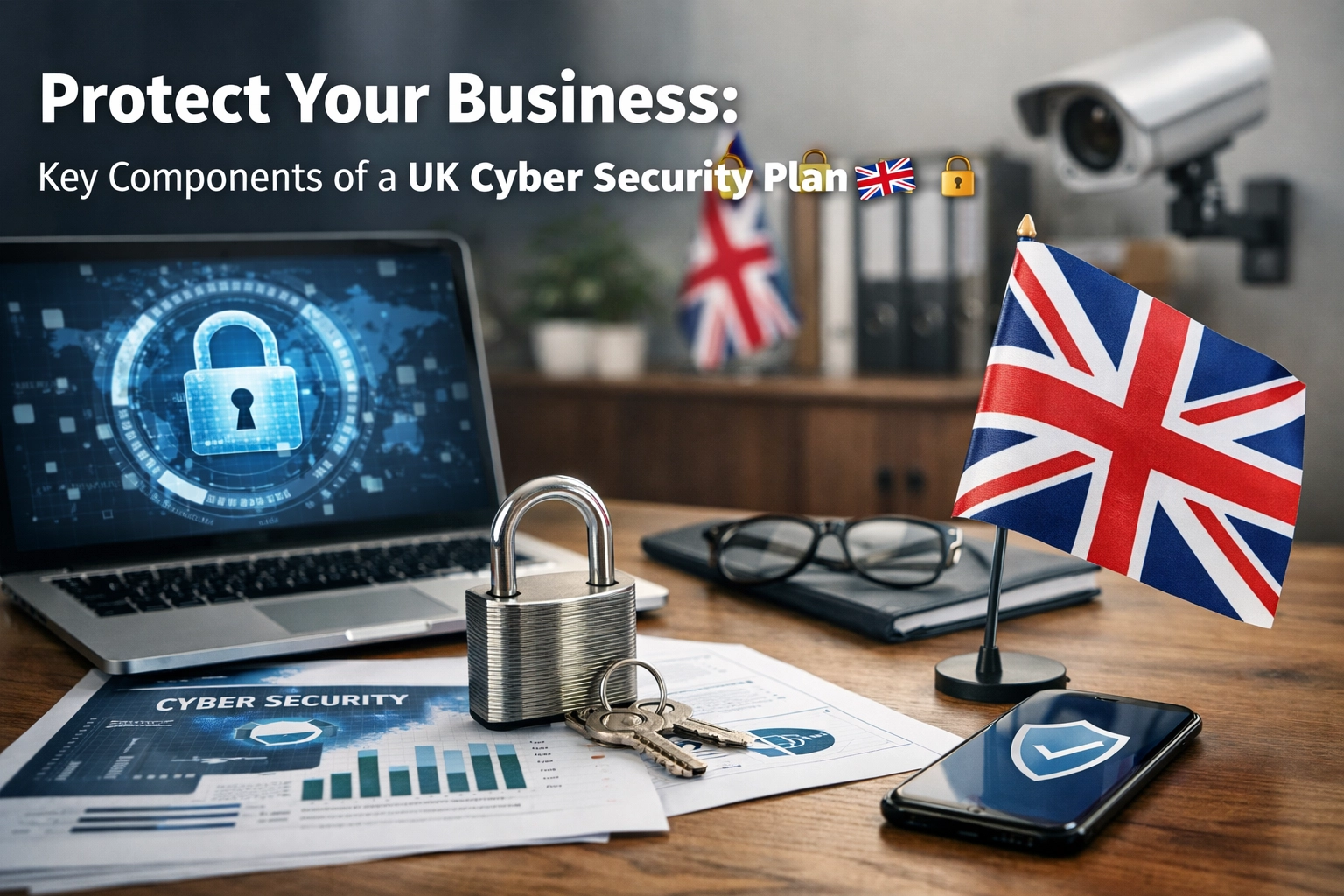

In 2026, the landscape of corporate security in the United Kingdom has shifted significantly. With the Cyber Security and Resilience Bill progressing through Parliament and committee stages wrapping up, the era of "optional" cyber hygiene is over. For UK businesses, the new legislative framework introduces stringent requirements for incident reporting, supply chain transparency, and: most importantly: board-level accountability.
At KGFM Ltd, we advocate for a holistic, 360-degree approach to protection. While our core expertise lies in Premier Choice physical security and manned guarding, we recognise that digital and physical security are two sides of the same coin. A breach in your digital perimeter can be just as devastating as a physical intrusion. Conversely, your digital data is only as secure as the server room it sits in.
Building resilience is not a task for the future; it is a mandate for today. Below are the ten essential components of a robust UK Cyber Security Plan, aligned with NCSC guidance, Cyber Essentials, and the evolving legal landscape.
Cyber security is no longer merely an "IT issue." Under the new 2026 regulations, the Board of Directors must take active ownership of cyber risk. This begins with assigning a specific, accountable person: such as a CISO or a dedicated Director: to oversee the security posture.
Businesses must align their internal policies with the Cyber Governance Code. This ensures that security is woven into the corporate culture and is considered in every strategic decision. Leadership must demonstrate a "top-down" commitment to security, ensuring that resources are allocated appropriately and that security performance is reviewed at every board meeting.
You cannot protect what you have not identified. A comprehensive risk management strategy involves regularly assessing threats and prioritising your most critical assets (your "crown jewels"). Whether it is intellectual property, client data, or operational technology, you must decide how to handle identified risks: mitigate, accept, transfer, or avoid.
We recommend utilising the NCSC Cyber Assessment Framework (CAF). This framework provides a systematic and comprehensive approach to assessing the extent to which cyber risks are being managed. By adopting this rigorous standard, UK businesses can ensure they meet the expectations of regulators and partners alike.
For any UK business, Cyber Essentials certification is the baseline. Not only is it often a mandatory requirement for UK government contracts, but it also provides a proven shield against the most common "commodity" cyber attacks.
Implement the five core controls:

Identity is the new perimeter. Enforcing the principle of "least privilege": ensuring employees only have access to the data necessary for their role: is vital. However, the most critical technical control in 2026 is Multi-Factor Authentication (MFA).
MFA must be mandatory across every entry point of your business. Whether it is email access, VPNs, or cloud storage, a single password is no longer sufficient. Regular audits of access permissions ensure that "privilege creep" does not occur when staff change roles or leave the company.
Your employees are your first line of defence, but they can also be your weakest link. Mandatory awareness training is essential. This should not be a once-a-year "tick-box" exercise. Continuous education, coupled with regular phishing tests, helps staff recognise and report suspicious activity.
By fostering a security-first culture, you empower your team to act as human sensors. When an employee feels comfortable reporting a potential mistake or a suspicious email without fear of retribution, your business becomes significantly more resilient.

Prevention is ideal, but detection is a necessity. Businesses must implement centralised logging to monitor network activity. By identifying anomalies: such as a login from an unusual location or massive data transfers at 3:00 AM: you can trigger an early warning.
A faster response time is directly correlated with lower recovery costs. Professional monitoring ensures that you are not finding out about a breach from the news or a ransom note, but from your own internal systems.
When a breach occurs, every second counts. You must have a tested Incident Response Plan in place. This includes specific playbooks for different scenarios, such as ransomware attacks or data leaks.
Furthermore, you must be aware of your legal reporting duties. Under current ICO rules, data breaches must be reported within 72 hours. With the Cyber Security and Resilience Bill, even tighter rules are incoming for critical providers. Knowing exactly who to call: from your IT provider to your legal counsel: is the difference between a controlled incident and a corporate disaster.

Ransomware remains a primary threat to UK businesses. Your last line of defence is a regular, tested backup strategy. Backups should be stored offline or in an immutable cloud environment to prevent them from being encrypted by the same malware that hits your main network.
Simply having a backup is not enough. You must regularly test the restoration process to ensure that your data can be recovered quickly and accurately, minimizing operational downtime.
In a connected economy, your security is only as strong as the weakest link in your supply chain. The 2026 Bill places heavy emphasis on supply chain assurance. You must vet your vendors and include specific security requirements in your contracts.
Whether it is your Managed Service Provider (MSP) or your data centre provider, you need to verify their security credentials. Demand Cyber Essentials Plus or ISO 27001 certification to ensure they are protecting your data with the same rigour you apply to your own.
Cyber security is not a "set-and-forget" project; it is a continuous process of improvement. Conduct annual audits, perform penetration testing, and update your controls based on the latest NCSC alerts.
As threats evolve, so must your defences. A static security plan is a failing security plan.
At KGFM Ltd, we believe that true security requires a holistic strategy. While digital firewalls protect your data from remote hackers, physical site safety protects the hardware that stores that data.
Physical access control is the essential first line of defence. If an unauthorised individual can gain physical access to your server room, they can bypass almost every digital security measure you have in place. Our professionally trained security personnel and SIA Standards compliant guarding services ensure that your premises: and the sensitive infrastructure within them: remain secure 24/7.
We provide tailor-made solutions that integrate seamlessly with your wider business resilience plan. From manned guarding to advanced surveillance, our personal supervision ensures that your physical perimeter is as impenetrable as your digital one.

The shift in UK legislation means the time for complacency has passed. Protecting your data, your reputation, and your future starts with a clear plan and the right partners.
KGFM Ltd is the Premier Choice for businesses seeking comprehensive security excellence. Whether you are navigating the requirements of Martyn’s Law or seeking to strengthen your site's physical integrity, we are here to help.
Take the first step towards total resilience.

CONTACT KGFM LTD TODAY We offer a FREE VENUE REVIEW to help you identify vulnerabilities in your physical security posture. Our expert team will provide actionable insights to ensure your business is fully protected from the ground up.
Address: 60 Tottenham Court Road, Fitzrovia, London W1T 2EW
Email: info@kgfm.co.uk
Website: www.kgfm.co.uk/admin/contactform.php
Join the conversation: What’s your top cyber priority this year? Drop a comment below and let’s discuss how we can build a more secure UK together.
#CyberSecurity #UKCyber #CyberEssentials #NCSC #CyberResilience #MFA #Ransomware #InfoSec #BusinessProtection #DigitalUK
